
The Gear Matters
Just Not as Much as You Think
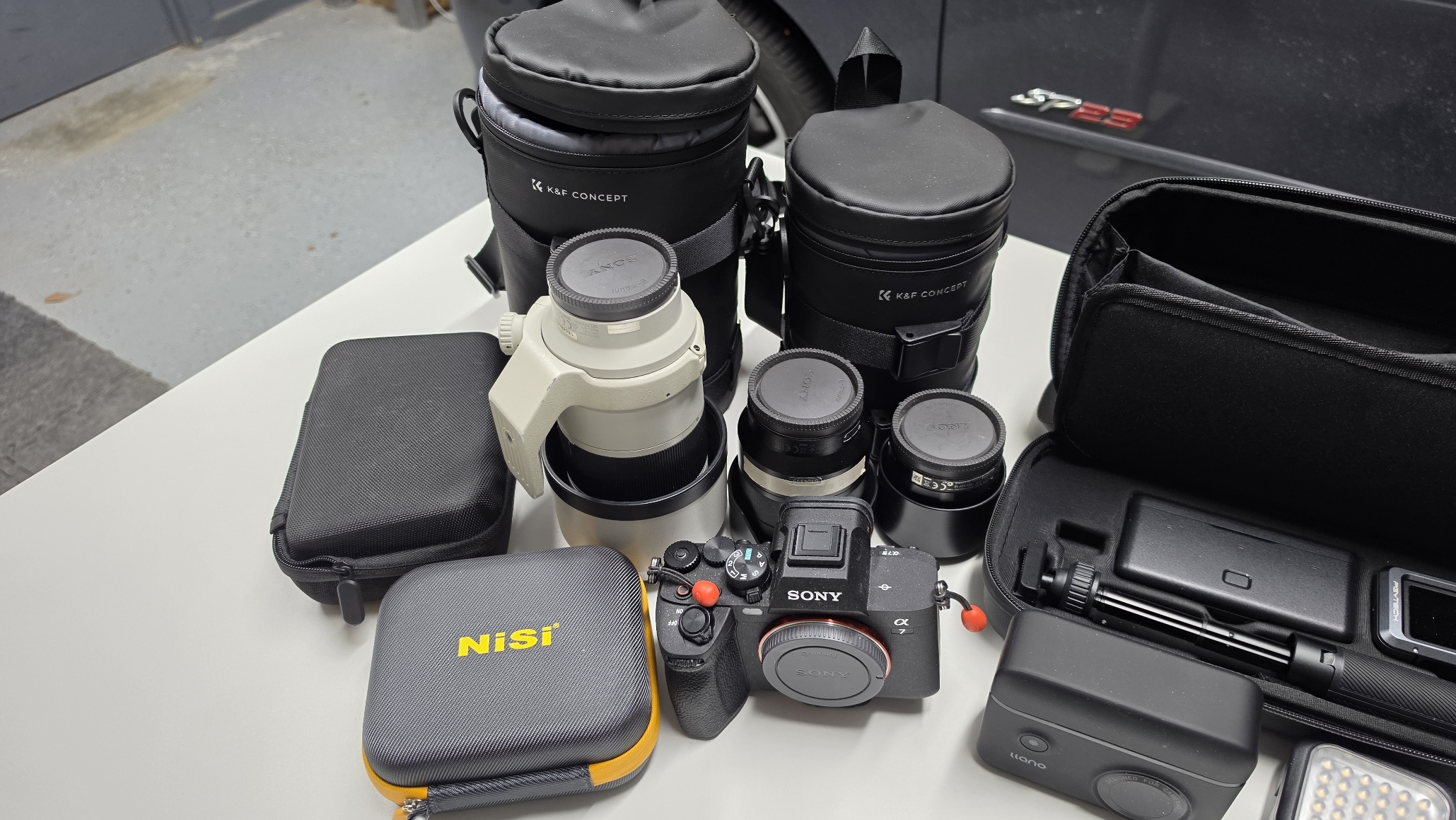
After more than 40 years of buying, carrying and using cameras, I’ve learned that more equipment rarely means better photographs.
I've owned a lot of camera gear over the years.
Some of it was brilliant. Some of it probably seemed like a good idea at the time. And there's undoubtedly been plenty of money spent on things that didn't make my photography one bit better.
That's photography.
But after more than 40 years behind a camera, I've become much simpler about equipment.
I want a camera that works, a lens I know, and as little between me and the photograph as possible.
Because I've never seen a camera make a photograph by itself.
Spend Your Money on the Glass
If I had to choose where to put my money, I'd still put it into the lens.
Camera bodies change constantly. There's always another one coming with more megapixels, better autofocus, another stop of dynamic range and some feature we're apparently unable to live without.
Six months later, there's another one.
A good lens is different.
I've used good glass across multiple cameras and for years at a time. More importantly, you get to know what that lens sees.
You start knowing where to stand before you lift the camera.
That's worth more to me than another page of specifications.
I Don't Need the Latest Camera
I like good cameras. Of course I do.
But I don't particularly care whether the camera I'm holding is the newest one.
Does it feel right in my hand?
Can I operate it without thinking about it?
Can I trust it when something happens in front of me?
If the answer is yes, it'll do.
The less I'm thinking about the camera, the more I'm looking at what's happening around me.
That's where I want my attention.
What I Actually Carry
These days my still photography revolves around a fairly simple set of lenses.
The 24–70mm f/4 is the workhorse. It covers most of what I want to photograph without making me think too much about equipment.
The 70–200mm f/4 comes out when distance is part of the photograph. Sometimes getting closer isn't the answer. The longer lens lets me watch without barging into somebody else's space.
And then there's the humble 50mm f/1.8.
Nothing particularly exotic about it. It's small, fast and uncomplicated.
If somebody was starting photography today, I'd still happily hand them a 50mm and tell them to go and make photographs.
Not because 50mm is somehow magical.
Because restricting yourself can be.
One camera. One lens. Go and look.
Carry Less
This has probably become more important to me as I've got older.
There's no prize for carrying everything you own.
I've done the bags stuffed with lenses, spare bodies and enough equipment to cover every conceivable situation.
The problem is that while you're deciding which bit of equipment to use, the situation you wanted to photograph can disappear.
I'd rather decide before I leave.
What am I going out to do?
Take what I need for that and leave the rest behind.
A good bag matters because it protects the equipment and doesn't get in my way. The same goes for a tripod. It needs to support what I'm putting on it, be stable enough to trust and practical enough that I'll actually carry the bloody thing.
That's about as complicated as it needs to be.
There's Nothing Wrong With Used Gear
I've never understood the obsession with everything having to come out of a brand-new box.
Photographers look after their equipment.
There is some excellent second-hand gear around, and I'd much rather buy a good used lens than compromise on something simply because I want it new.
Check it properly. Look at the glass. Check the condition. Make sure everything works.
Then go and use it.
A scratch on the lens barrel won't appear in your photograph.
The Bit You Can't Buy
This is the part that gets forgotten whenever we talk about equipment.
You can buy the same camera as your favourite photographer.
You can buy the same lens.
You can copy the settings.
You can even stand in roughly the same place.
What you can't buy is their eye.
And they can't buy yours.
That comes from looking and making mistakes. Missing photographs. Making thousands of ordinary frames and occasionally finding one that makes you stop.
Equipment helps.
Good equipment can certainly make the job easier.
But eventually you've got to stop looking at cameras and start looking through them.
That's where the photograph is.
Pete George
See with Purpose. Share with Heart.